

October 29, 2026
As AI adoption accelerates, concerns about cognition are on the rise. Can you use “smart” tools without losing your edge?
KEY TAKEAWAYS:
- AI can make work easier without making people smarter. The difference often comes down to what users can do when the tool is no longer available.
- The same technology that improves individual output can also drive a “race to the center,” elevating the value of personal taste, perspective, and judgment.
- The greatest risk may not be bad output but overconfidence in output that hasn't been adequately challenged, verified, or understood.
- The cognitive risks of AI are real, but so are the countermeasures. Understanding both offers clues for preserving agency in an increasingly automated world.
Across human history, people have sought ways to offload cognition. Calculators shortcut mental math. GPS transformed wayfinding. Spell check helps us look smarter online. By design, technical innovation enhances certain capabilities while obsolescing others.¹ But something about artificial intelligence feels different.
It’s common to hear comparisons between AI and calculators. It’s a clean metaphor: most generative models are, at their most basic level, running predictive calculations. But the prevailing concern isn’t that AI makes us worse at long division, it’s that these tools enable—and even entice—users to shortcut cognitive processes, which could erode discrete skills and delegate thought itself.
A lot of ink has been spilled on whether AI is making us dumber, but perhaps the bigger question is how to stay smart when cognition may be a hidden cost of convenience.
Part research review, part study of one, this piece explores emerging perspectives on AI adoption while examining first-hand how these tools might be effectively integrated without diminishing independent thought.
Is it offloading or dependency?
One core question at the center of this debate is whether AI makes users more or less capable. The calculator comparison is likely strongest when users delegate specific tasks to AI models to elevate existing skillsets or expand upon an existing body of work. In these cases, users remain fully capable of completing tasks independently, while the system simply operates as an accelerant, reducing the effort required.
Over time, though, delegation can risk atrophy. Recent preliminary studies have identified potential cognitive debt associated with large language models (LLMs), citing correlations between AI use and underperformance across neural, linguistic, and behavioral measures.² Similar concerns have emerged from research focused on the potential for AI to help users identify misinformation online. Where models might have improved participants’ ability to detect false information in the moment, those gains did not reliably translate into independent discernment once assistance was removed.³
Even those with advanced training aren’t immune. Research focused on medical practitioners in Poland concluded that continuous exposure to AI in professional settings might reduce diagnostic accuracy when procedures were conducted unassisted.⁴
These trends highlight a potential “dependency paradox” in which augmentation provides immediate benefits but undermines long-term capabilities to replicate results without AI.³
However, none of this suggests that dependency is inevitable. It’s important to consider that offloading is often not a single act but a continuous process. The misinformation study revealed several patterns of AI use, with participants developing a range of relationships with the tools over time. Some became increasingly reliant, while others treated AI as a secondary tool or even grew more skeptical of its utility. Every approach carried tradeoffs. Excessive reliance correlated with growing dependency, but resistance could have limited genuine learning opportunities.³
These findings suggest that outcomes may not solely depend on whether AI is used but also on how active users remain throughout the process—as well as how effectively they can identify productive strategies for integration.

For instance, during the development of this article, AI was deliberately leveraged to challenge, extend, and structure rather than as an “answer engine.” At the outset, the LLM functioned as a preliminary interviewer, posing questions to get raw user reaction onto the page and driving deeper exploration through follow-up and pushback where necessary. Elsewhere, it operated as an advanced search engine, assisting with the identification of relevant research, contradictory findings, and avenues for further investigation.
Some have noted that AI seems to exhibit a gravitational pull toward dependency,⁵ though it can also inspire new ways of working, expand authorial range, and enhance underlying skillsets. Where AI dependency can be measured in screentime, prompt volume, and synthetic content detection, the more philosophical question is whether people retain authorship over the thinking itself. Where more passive use correlates with dependency, users must strive for active, continued engagement, “holding the pen” to reinforce skill-building and maintain ownership over interpretation, validation, and judgement when parts of the process are delegated elsewhere.
Dependency is just one part of the equation, though. Even if people make a concerted effort to hold the pen, what happens when everyone is drawing from the same well?
The average of everything
A frontrunner for the internet’s new favorite term might be “AI slop”. While the definition is amorphous, people tend to know it when they see it. So-called slop follows a somewhat contradictory pattern: it’s polished and technically competent yet somehow superficial and uncanny. In short, it may not be worth the resources required to generate it.
This points to a deeper question than whether AI-generated content is inherently good or bad: what happens when parts of the creative process become optional?
Some research supports an equally contradictory conclusion. In a study examining the impact of AI on creative writing, researchers found that the integration of AI-generated ideas in stories yielded higher ratings in output creativity—particularly among writers deemed less creative at the study’s outset.⁶ However, there’s a catch.
While AI improved individual output, AI-enabled stories were deemed more similar to one another when compared to those written by humans alone. In short, AI may have benefited individual writers and potentially offered an equalizing effect across skill levels, but that uplift seems to have come at the cost of collective content novelty.⁶
Revisiting the calculator comparison, LLMs are designed to identify patterns, predict likely outcomes, and generate responses rooted in statistical relationships. They excel at surfacing probable and familiar answers, but comfort and consensus rarely create great art.
Fortunately, convergence can be resisted. The remedy? Taste.
While taste is often positioned as a starting point in the creative journey, in its more mature form, it becomes a necessary mechanism for higher order decision-making. It informs creative direction, editorial refinement, competitive differentiation, and the ability to identify opportunities that consensus often overlooks.⁷
Some of the best work often emerges from novel combinations of experience, perspective, and judgement, making taste more than a creative asset. It’s a safeguard against convergence and carries a degree of moral and intellectual weight, helping individuals challenge assumptions, recognize bias, and make strategic choices that extend beyond the most probable outcome.⁷

Applied to the development of this article, the approach was more straightforward: work around the LLM. Primary sources, contradictory evidence, prior knowledge, and independent interpretation were foundational inputs. AI proved helpful for research, synthesis, and structure, but perspective ultimately depended on work that happened outside the prompt window.
However, even if users try to reduce dependency and preserve originality, another challenge remains. AI does more than produce answers. It can provide answers that sound convincing regardless of accuracy, raising perhaps the most difficult question of all: do users have adequate expertise to tell when the AI is wrong?
Fluency does not equal expertise
AI has facilitated access to knowledge in both volume and immediacy that can expand well beyond basic search engines. With just a few words, users unlock a host of specialized skills from writing and research to strategy, artistry, and coding that would otherwise take years to master. However, participation in the creation of something doesn’t necessarily equate to ownership of the output.
Decades of psychological research suggest that humans rarely evaluate information in a vacuum. Existing perspectives and initial data gathering can introduce a kind of “anchoring bias,”⁸ and once it takes hold, information can continue to influence perception even when people are presented with contradictory evidence.³
These tendencies predate artificial intelligence, but AI may amplify them. Experimental research into AI-assisted decision-making has found that users often anchor on AI-generated recommendations and may place disproportionate weight upon them due to perceived objectivity or authority—even when independent evaluation might be warranted.⁸
Taken together, both anchoring and the “continued influence effect”³ have significant implications. However, there’s another layer to uncover.
In one example, 83% of participants who wrote AI-assisted essays failed to provide an accurate quotation from work they had submitted just moments earlier.⁵ In these types of scenarios, users may engage with output without fully internalizing the underlying knowledge.
The takeaway? AI can create content that looks like expertise without reflecting expert judgement.
This is probably where the calculator comparison falls apart. When AI is used to provide qualitative outputs, the challenge shifts from finding an answer to evaluating one. The underlying risk then is not so much bad output but confidence that outpaces competence.
None of the AI functions leveraged for this piece eliminated the underlying work, and, in many cases, they demanded more of it. Every source still needed verification, and every conclusion required human judgement. AI was not used solely for validation but also as a source of productive friction to help ensure synthesis, expansion, and refinement all pushed the human in the loop beyond the bounds of initial AI engagement.
As a result, a useful litmus test emerged throughout the process: could the work be defended or reproduced without the use of AI? Or, simply put: if asked, could the author still quote it?
Why is it so easy to take AI too seriously? It's uncanny.
One of the other reasons that the AI-calculator comparison continues to fall flat is that it’s fairly easy—if not instinctual—to personify these tools. Commercial agents are often branded like colleagues or characters, and generative systems are conversational by nature. Notably, in the case of LLMs, output includes follow-up questions, validation of user perspectives, retained context, and embedded calls to action. While AI may ultimately perform calculations, calculators don’t talk back.
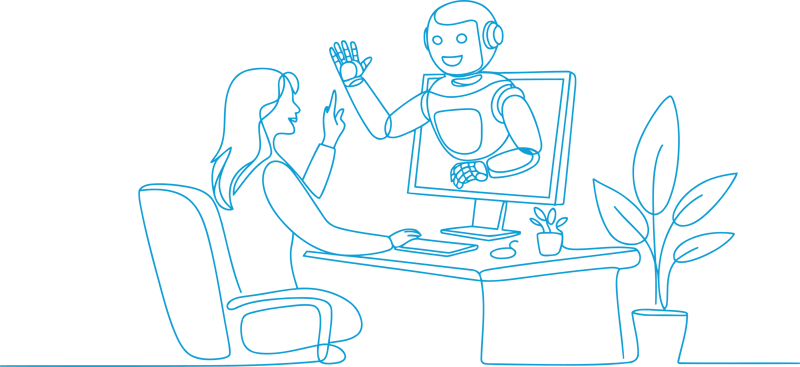
There is also quite a bit of evidence to support the idea that users are anthropomorphizing their AI systems. A recent survey⁹ found that:
- 53% of respondents sought advice from LLMs on how to handle difficult situations with other people.
- 39% agreed that AI understood them better than most people.
- 36% of companion users felt AI cared about their wellbeing.
- 31% of people who use AI for social and emotional purposes considered AI their friend.
Prevailing social psychology models present how individuals might attain the power to influence people, behavior, and situations. These “bases of power” range from formal authority and expertise to those with the ability to reward, charm, connect, and persuade.¹⁰ As human-to-AI interactions increasingly resemble human-to-human ones, the potential for similar influence dynamics can emerge.
AI can rapidly source expert knowledge, mimic familiarity, and reward engagement with validation, convenience, and instantaneous feedback. These systems do more than help users complete tasks. They can shape how people evaluate information, form opinions, and make decisions. As a result, users may not always recognize where assistance ends and influence begins.
Preserving agency in the age of AI
At the center of this exploration are two critical questions: how do we preserve human agency in an increasingly AI-driven world? And, how can we benefit from these systems without outsourcing the critical thought, creativity, and decision-making they were designed to augment?
Understanding the underlying risks helps reveal practical remedies, and each risk has a corresponding countermeasure that can help mitigate its impact. Dependency? Hold the pen. Homogenization? Develop taste. Overconfidence? Introduce productive friction and formal review.
These may not be panaceas (and they admittedly put the onus on the user), but they can help preserve agency as AI becomes increasingly embedded in personal and professional life.
Is AI really eating our brains?
The answer is likely more nuanced than optimists or doomsayers would like us to believe. In fact, some researchers caution that framing AI as simply “making people dumber” risks undermining the complexity of prevailing research.¹¹
AI has been shown to help improve performance, accelerate learning, augment creativity, and unlock knowledge at scale. However, it can also foster dependency, encourage uniformity, and inspire overconfidence that, in some instances, borders on hubris.
While developing this piece, AI was used to spark thought through collaborative intake, surface research that both supported and challenged perspectives, identify logical blind spots, highlight connections, refine language, and inform structure. At the same time, the process was intentionally designed to preserve authorship. AI informed the work, but it did not determine perspectives, interpret evidence without formal review, or serve as a substitute for human judgment.
As AI adoption accelerates, questions surrounding value, risk, and appropriate use remain important. Equally important is how people engage with these tools while preserving critical thinking, discernment, and creativity. AI doesn’t necessarily make thinking obsolete, but it can make it easier to sidestep.
Since models continue to evolve, any practical framework must evolve alongside them. The goal is not necessarily to develop a permanent set of rules but a compass that helps preserve agency regardless of where the technology goes next.
Want to learn more? Explore FCAT's AI research.
References & Disclaimers
-
McLuhan, Marshall, and Eric McLuhan. Laws of Media: The New Science. University of Toronto Press, 1988.
-
Kosmyna, Nataliya, et al. “Abstract for: ‘Your Brain on ChatGPT: Accumulation of Cognitive Debt when Using an AI Assistant for Essay Writing Task.’” MIT Media Lab, 10 June 2025, https://www.media.mit.edu/publications/your-brain-on-chatgpt/.
-
Rani, Anku, et al. “Dialogues with AI Reduce Beliefs in Misinformation but Build No Lasting Discernment Skills.” Proceedings of the 2026 CHI Conference on Human Factors in Computing Systems, 2026, pp. 1–26. ACM Digital Library, https://dl.acm.org/doi/epdf/10.1145/3772318.3790656.
-
Budzyń, Krzysztof, et al. "Summary: ‘Endoscopist deskilling risk after exposure to artificial intelligence in colonoscopy: a multicentre, observational study.’" The Lancet Gastroenterology & Hepatology, vol. 10, no. 10, Oct. 2025, pp. 896–903, https://doi.org/10.1016/S2468-1253(25)00133-5.
-
Stackpole, Beth. "‘AI Gravity’ Is Pulling You Toward Dependency. Here's How to Push Back." MIT Sloan: Ideas Made to Matter, MIT Sloan School of Management, 2 June 2026, mitsloan.mit.edu/ideas-made-to-matter/aigravity-pulling-you-toward-dependency-heres-how-to-push-back.
-
Doshi, Anil R., and Oliver P. Hauser. "Generative AI enhances individual creativity but reduces the collective diversity of novel content." Science Advances, vol. 10, no. 28, 12 July 2024, https://www.science.org/doi/10.1126/sciadv.adn5290.
-
Nohria, Nitin. "Good Taste Is More Important Than Ever." The Atlantic, 10 June 2025, www.theatlantic.com/technology/archive/2025/06/good-taste-ai/683101/.
-
Carter, L., and D. Liu. "How Was My Performance? Exploring the Role of Anchoring Bias in AI-Assisted Decision Making." International Journal of Information Management, vol. 82, June 2025, article no. 102875, ScienceDirect, www.sciencedirect.com/science/article/pii/S0268401225000076.
-
Elon University News Bureau. “Imagining the Digital Future Center Reports on ‘The Rise of AI Companions’.” Today at Elon, Elon University, 2 Sept. 2026, www.elon.edu/u/news/2026/09/02/imagining-the-digital-future-center-reports-on-the-rise-of-ai-companions/.
-
Mohn, Elizabeth. "French and Raven’s Bases of Power." EBSCOhost Research Starters, 2022, www.ebsco.com/research-starters/social-sciences-and-humanities/french-and-ravens-bases-power/.
-
Kosmyna, Nataliya. “Project: Your Brain on ChatGPT.” MIT Media Lab, https://www.media.mit.edu/projects/your-brain-on-chatgpt/overview/.
-
Franks, Judy Ungar. Media: From Chaos to Clarity: Five Global Truths That Make Sense of a Messy Media World. 2nd ed., Marketing Democracy, 2018.
The opinions provided are those of the author and not necessarily those of Fidelity Investments or its affiliates. Fidelity does not assume any duty to update any of the information. Fidelity and any other third parties mentioned are independent entities and not affiliated. Mentioning them does not suggest a recommendation or endorsement by Fidelity.
© 2026 FMR LLC. All Rights Reserved. 1287916.1.0
SHARE: