
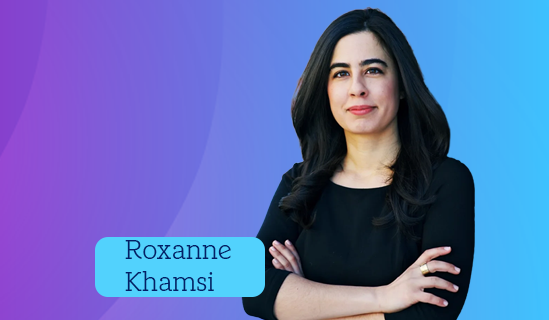
Not all mutations are bad. Roxanne Khamsi covers immunity, disease, and why the term deserves a reframe.
In Beyond Inheritance: Our Ever-Mutating Cells and a New Understanding of Health, science journalist Roxanne Khamsi argues that our genetic makeup is not a fixed blueprint handed down at birth but a living, constantly evolving landscape. FCAT's VP of Research John Dalton connected with Khamsi to discuss why mutation is an engine of diversity—and what our changing genes could mean for cancer, immunity, and aging.
John Dalton: Your book is about one big idea: our genetic makeup is not static, but always evolving and mutating. What was the spark behind this?
Roxanne Khamsi:
I always wanted to be a science journalist, and straight out of school, I got a job at Nature magazine. At that time, there was a growing discussion about the mutational burden of tumors and how much genetic change happens in cancer. Oftentimes, we say that someone succumbed to cancer because the treatment failed, but really, the cancer had developed resistance.
Then one day I was at Nature’s office, and I was reading a paper that came out that demonstrated that there was a double risk of heart attack from the presence of mutant blood cells. I thought, “Wait a minute, does this mean that diseases of aging are actually diseases of acquired mutation?” That was around 2017 or so, and that’s when I started to dig into the topic.
John Dalton: I’m old enough to have a pretty negative reaction to the word “mutation.” I guess all of those old science fiction movies I watched growing up where radioactive poisoning spawns all sorts of weird monsters are to blame. But you point out that not all mutations are bad—far from it. Tell me more about that.
Roxanne Khamsi:
During COVID, there was a lot of talk about the importance of getting booster shots. One guest on a virology podcast put it well: we need the boosters to “expand the repertoire” of our immune cells. In other words, our immune cells rely on mutations as the engine of diversity, and diverse immune cells are good because they give you a diverse range of antibodies. You need that because there is a diverse range of pathogens out there.
I realize that this is controversial for some people. You’re not the only one who’s uncomfortable with the term “mutation.” There are a lot of people in the scientific community who shy away from using it. They prefer to talk about “variants.”
But I want to reclaim mutation. I spend a lot of time listening to people who are experiencing rare diseases that stem from genetic mutations. There’s a lot of othering of people like this. I hope that, by letting go of some antiquated notions of genetics and evolutionary change, we can make peace with the idea that we’re constantly changing.
John Dalton: Where is the research headed right now?
Roxanne Khamsi:
Of course, much of the focus is on wellbeing and aging. Scientists can now look at the signatures of your mutations—so the proportion of adenine and thymine in your genetic makeup—and already they can distinguish between people who have smoked versus chewed tobacco. There’s evidence that proper sleep could lower mutational burden, and though it’s not definitive, there are hints that caloric restriction can lower it as well.
I think this is where the near-term focus will be: improving our understanding of how environmental factors or behavioral changes can alter the mutational landscapes of our bodies. The future lies in explaining how and why these mutations occur and developing therapies to manage them effectively.
References & Disclaimers
The opinions provided are those of the author and not necessarily those of Fidelity Investments or its affiliates. Fidelity does not assume any duty to update any of the information. Fidelity and any other third parties mentioned are independent entities and not affiliated. Mentioning them does not suggest a recommendation or endorsement by Fidelity.
© 2026 FMR LLC. All Rights Reserved. 1292330.1.0